
English| EUR
Suggested for you
More currencies
Choose a language
Melidoni Cave sits 30 kilometers southeast of Rethymno, a frequent midpoint stop on quad and ATV tours crossing the Mylopotamos region. Most riders arrive without knowing the descent involves 100 steps, the conservation fee, or the narrow window before tour buses fill the chamber.
Quick answer
Melidoni Cave opens daily from 09:00 to 17:30, charges a 4 EUR conservation fee per person, and requires descending 100 steps to reach the main chamber. The cave remains open year-round with consistent hours across all seasons. Arrive between 09:00 and 11:00 to avoid the heat and the surge of organized tour groups that dominate the site after midday.
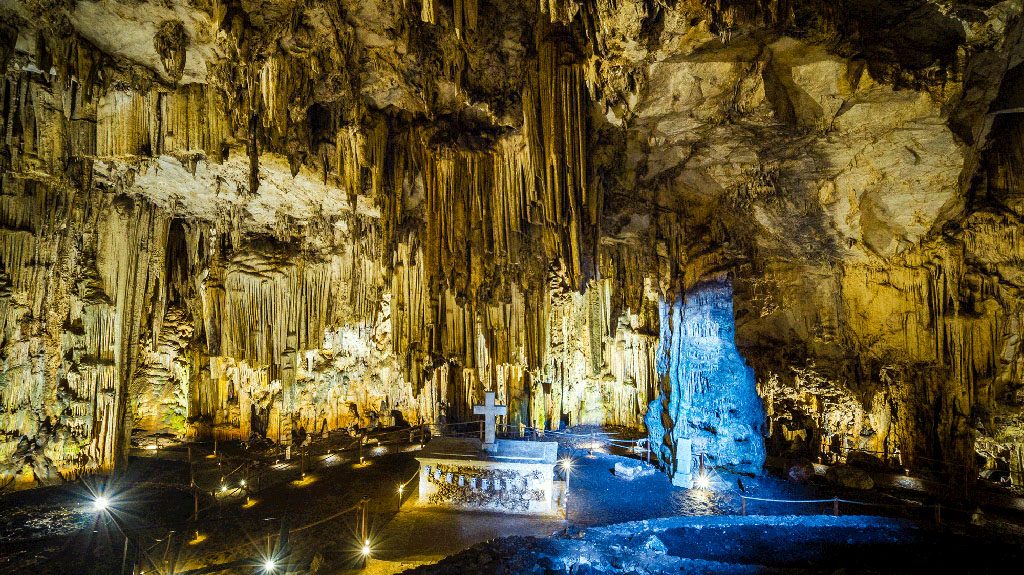
The descent into Melidoni begins at a stone portal cut into the hillside, where daylight narrows into a staircase dropping 100 steps through cool limestone. Every quad safari route threading through Rethymno's inland villages pauses here, turning a solitary archaeological site into a procession of helmets and dust-streaked boots between late morning and mid-afternoon. The cave's main chamber stretches 48 meters deep, its ceiling studded with stalactites that took millennia to form. A stone altar marks the site of an 1824 siege, when Ottoman forces sealed 370 villagers inside; the ossuary near the rear wall holds their remains. Tour operators allocate fifteen to twenty minutes for the stop, enough to photograph the formations and read the plaques, but the Conservation Council enforces a visitor cap during peak hours to protect the fragile calcite structures. Riders booking an atv safari rethymno itinerary should confirm whether the cave fee is included or paid on-site—most operators leave it unbundled. The ticket desk accepts cash and card, and the attendant provides a laminated map marking the chamber's three named formations: the Elephant, the Curtain, and the Organ Pipes. Mobile signal cuts out halfway down the staircase, so route coordination happens above ground. The conservation fee funds the LED path lighting installed in 2019, replacing the old halogen fixtures that destabilized the cave's humidity. The lighting dims automatically when no motion is detected, a feature that startles first-time visitors accustomed to perpetually lit tourist caves. Rangers stationed at the entrance monitor group sizes and enforce the no-smoking rule; residue from decades of torch visits still streaks sections of the western wall. The site closes promptly at 17:30, giving the final entry window a hard edge that catches late-afternoon riders off guard.
“The staircase drops through a temperature gradient that shifts from Cretan summer heat to a constant 18°C in fewer than thirty seconds.”
The best arrival window for visiting Melidoni Cave during an ATV safari is between 09:00–11:00. This timing allows visitors to bypass peak heat and the larger tour groups that typically arrive later in the day.
Mild 20-25°C, pleasant for riding
Hot, often exceeding 30°C
—, ideal for steady pacing
Verdict: The optimal time to visit is on a weekday morning during May or October, arriving promptly at 09:00.
Melidoni Cave welcomes visitors throughout the week to explore its historical chambers. The site maintains consistent daily hours to accommodate travelers on local ATV safari routes.
Melidoni Cave is located in the Mylopotamos region, approximately 30 kilometers east of Rethymno. The most direct approach via ATV safari involves navigating the secondary road network connecting the village of Melidoni to the cave entrance.
Follow the National Road E75 towards Heraklion, then exit at Perama/Melidoni and follow local signage
KTEL bus from Rethymno station to Melidoni village, followed by a short local transit or walk
From Melidoni village center via the designated access road
The arrival area features a designated parking space for vehicles. Plan your arrival for the 09:00–11:00 window to avoid mid-day heat and large tour groups.
Melidoni Cave presents significant physical challenges for visitors due to its terrain. Access is limited by a steep descent that requires navigating 100 steps.
The cave interior and entrance are not accessible by wheelchair.
The path to the cave entrance requires navigating 100 steps.
Visiting during the recommended 09:00–11:00 window helps avoid crowds and heat.
Melidoni Cave served as a sacred sanctuary long before modern atv safari rethymno excursions brought visitors to its chambers. Archaeological evidence places continuous ritual use from the Neolithic period through the Roman era, when the cave functioned as a shrine to Hermes Tallaios, a bronze-age deity later syncretized with the Olympian Hermes. Votive offerings, ceramic fragments, and altars excavated from the interior confirm centuries of worship within the limestone cavern. The site's most documented episode unfolded in October 1823 during the Greek War of Independence. Roughly 370 villagers—men, women, and children from surrounding settlements—sought refuge inside the cave to escape Ottoman reprisals. Ottoman forces discovered the hideout, blockaded the entrance, and ignited fires that suffocated those sheltered within. The massacre left no survivors. A marble ossuary now stands inside the main chamber, holding the remains recovered during later excavations. Formal archaeological study began in the late nineteenth century, when German and French teams catalogued the cave's stratigraphy and religious artifacts. Systematic excavation in the 1930s and again in the 1960s confirmed occupation layers spanning four millennia. The Greek Ministry of Culture declared Melidoni a protected monument in 1987, restricting commercial development while permitting guided entry. Visitors today descend the hundred-step staircase into the principal chamber, where ceiling-mounted lighting illuminates the 1823 memorial and the altar niches carved into the western wall. The cave's historical depth—from Bronze Age sanctuary to modern remembrance site—remains legible in the architecture and inscriptions that line the approach to the main hall.
Neolithic communities begin using the cave for shelter and early ritual activity
Bronze Age Cretans establish a cult site dedicated to Hermes Tallaios inside the main chamber
Roman-era worshippers expand the sanctuary, leaving votive inscriptions and altars that survive in situ
Ottoman forces seal the cave entrance and ignite fires, killing 370 Greek villagers sheltering inside during the War of Independence
European archaeologists conduct the first systematic surveys, cataloguing ceramics and skeletal remains
Greek Ministry of Culture designates Melidoni Cave a protected archaeological monument
Installation of modern lighting and walkways enables year-round public access while preserving the ossuary and altar zones
Everything you need to know about atv safari rethymno
The cave is open daily from 09:00 to 17:30. These hours apply throughout the week, including weekends and public holidays. Visitors should factor these times into their travel planning to avoid arriving outside of operational hours. Check the official site for any sudden changes to the schedule before your departure.